Tagged: bird
Bobcat encounter
A few weeks ago while photographing birds in Central California’s scenic oak woodlands, my peripheral vision picked up movement closer to the parking lot. I quickly swung the camera around, thinking the fuzzy shape might be a fox, but to my astonishment saw the characteristic cat shape and tail of a bobcat. This was an animal I had never seen before, and was not expecting to obtain any good photos before it disappeared.
I quickly caught up to it as it began navigating its way down a boulder-strewn hillside. At this point I was able to photograph a few look back poses, and I started to plan where to position myself next. I had a rough idea of where the cat might be going, and was able to quickly walk ahead on an adjacent trail. As expected, the bobcat began walking through a grassy meadow after making its way down the boulders. It paused a few times, seemingly scanning for prey, and completely tolerant of my presence. It eventually sat down for a few minutes, then without warning ran off and could not be relocated.
In total I had 8 minutes with this individual, and I’m really pleased with the range of poses and photos I was able to capture in such a short length of time.
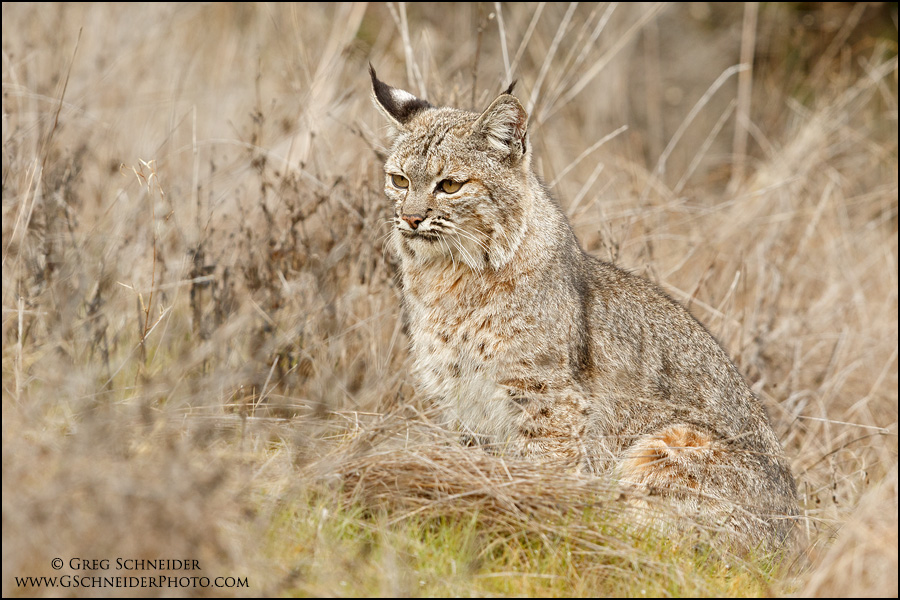
Adult Bobcat resting in grasses (click to enlarge)
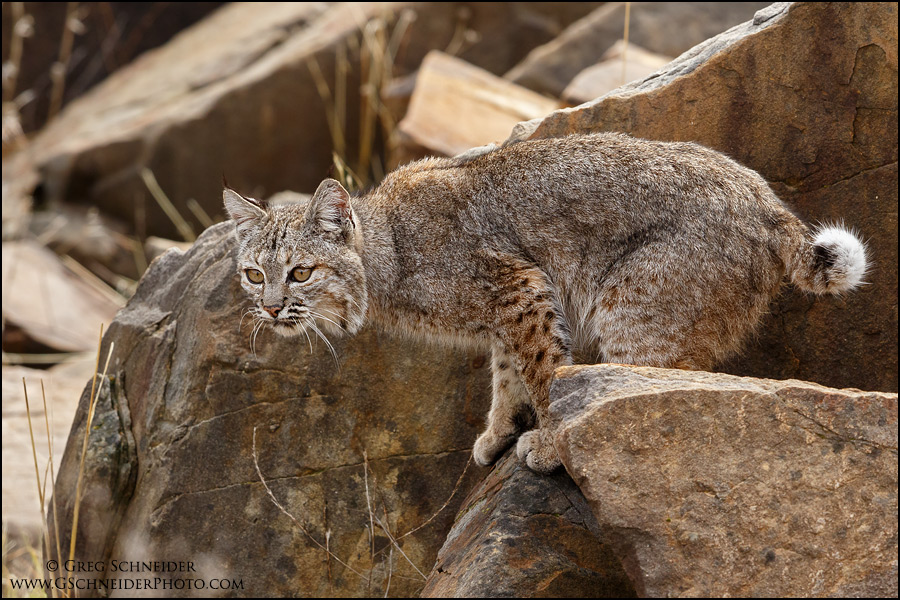
Bobcat stalking on rocks (click to enlarge)
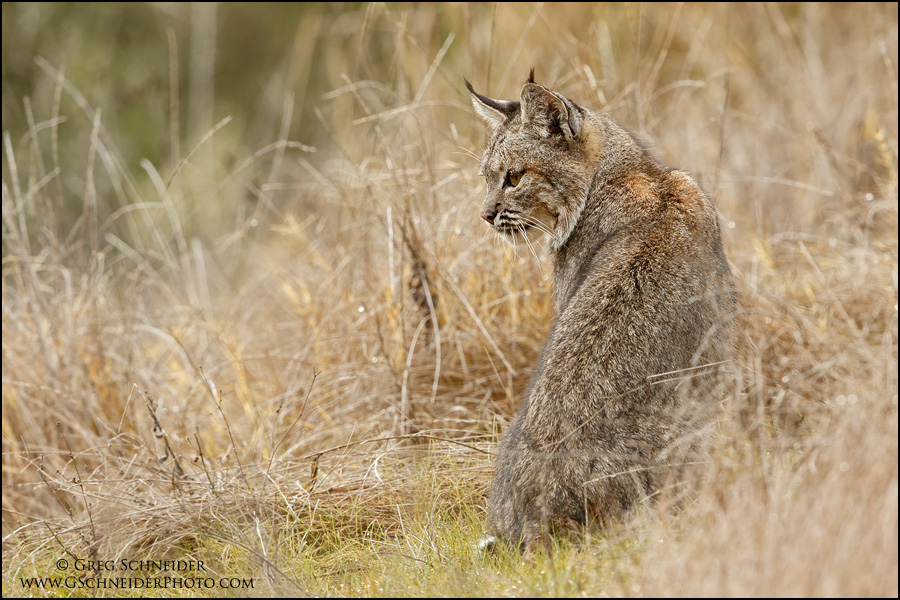
Bobcat scanning meadow (click to enlarge)
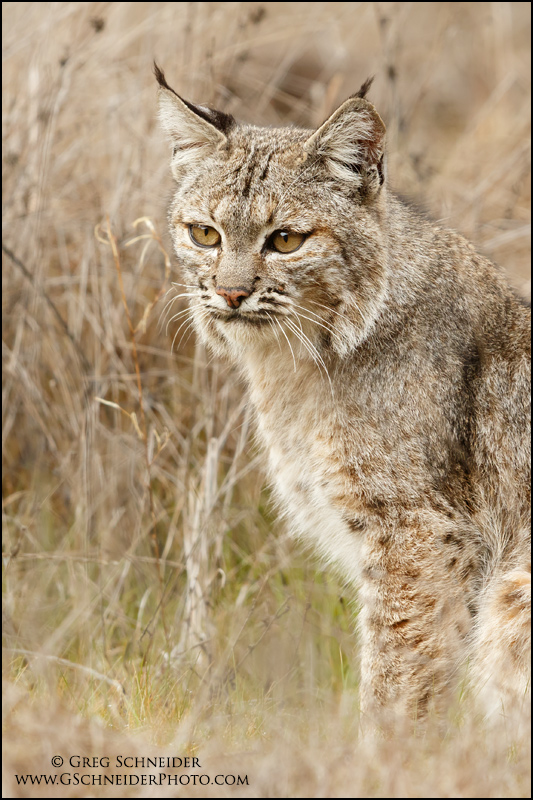
Bobcat Portrait (click to enlarge)
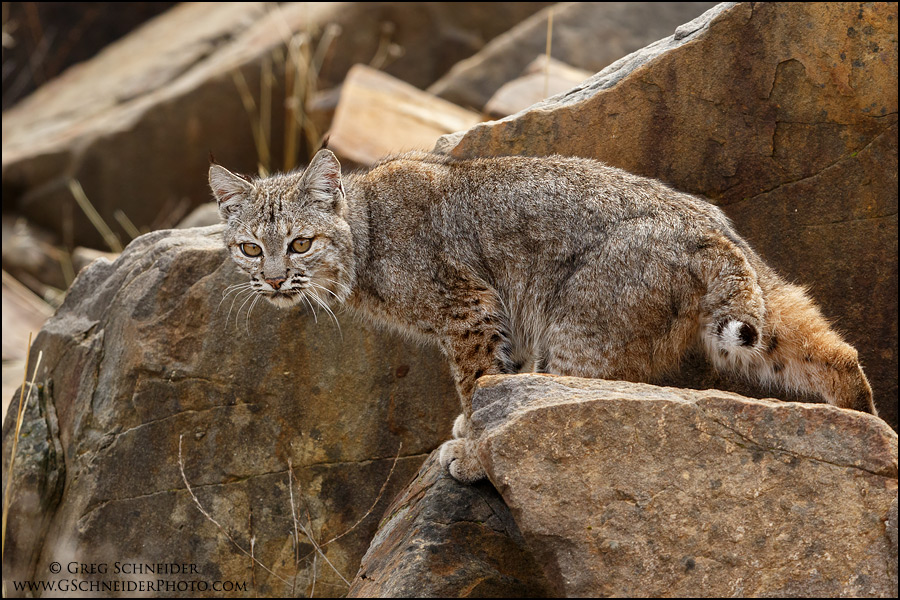
Bobcat on rocks (click to enlarge)
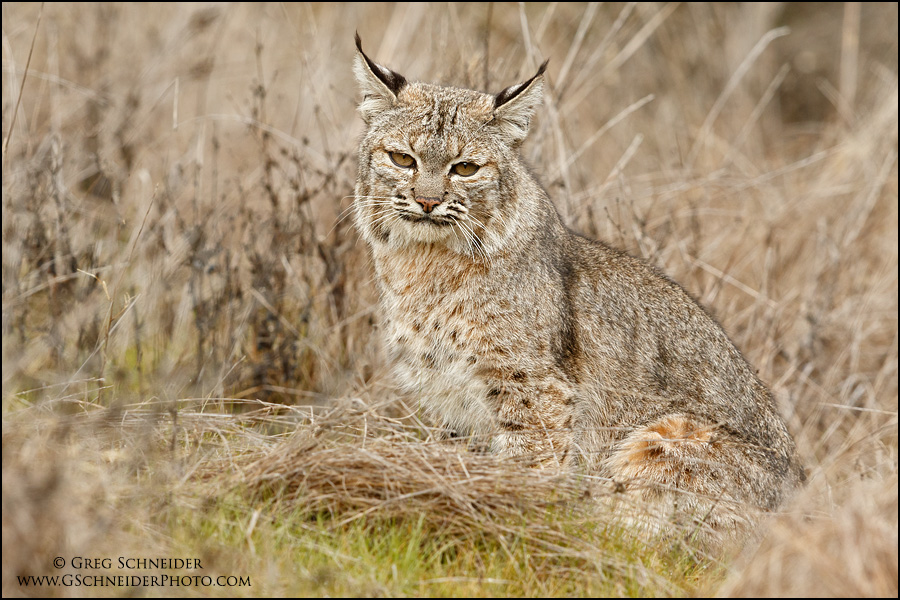
Bobcat resting in grasses (click to enlarge)
Red-breasted Sapsucker in habitat
I’ve had mixed success shooting red-breasted sapsucker on the west coast. Despite visiting several locations where other photographers have easily obtained great photos, I was always hampered by either not finding them, or having uncooperative birds.
On one occasion did obtain several photos, and although the distance was much farther than I would prefer, I used slight more creative cropping to frame the bird in a pleasing way. Traditionally the general rule of thumb would have been to crop with the bird in the lower left part of the frame, but to my eye that left me with far too much of the tree trunk in the frame. To me this gives a great perspective on the typical rain forest habitat this bird lives in.
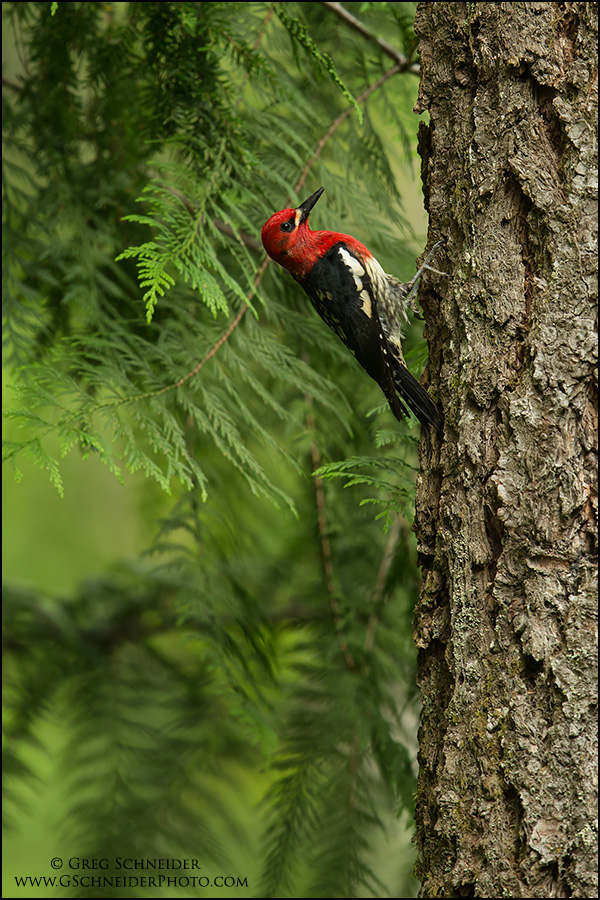
Red-breasted Sapsucker in Habitat (click to enlarge)
Bald Eagle preview
Having just returned from a week in Alaska, I thought I would share one image which caught my eye. I’ve never shot so many images and filled so many cards in such little time. Hope to process and post more soon!
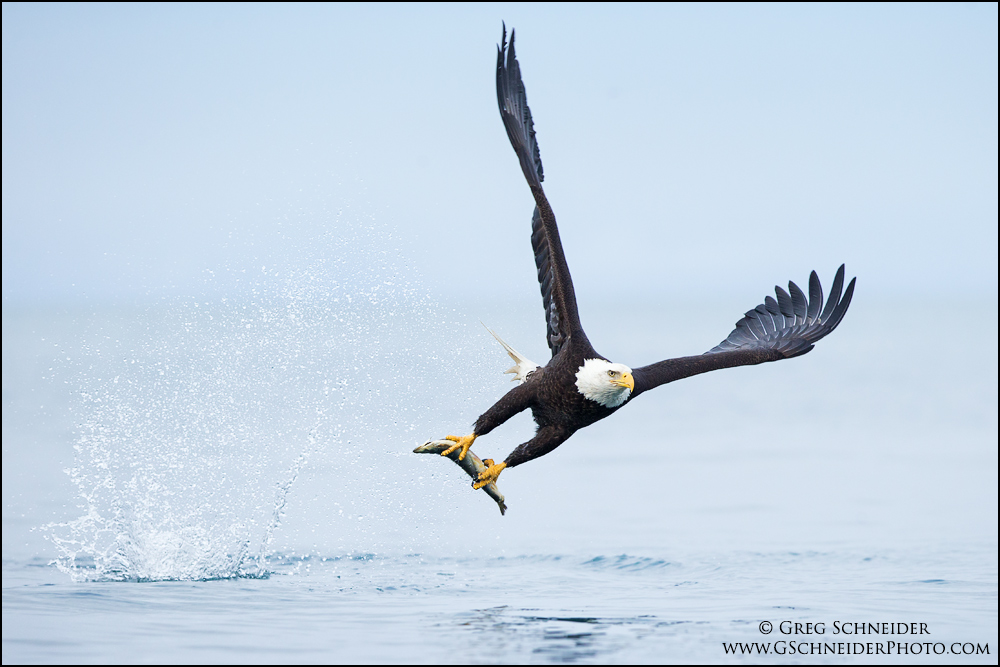
Bald Eagle snatch
Peregrines of Niagara Falls
As residents of cliffs (alternatively, downtown office towers), it should come as no surprise that peregrine falcons breed at Niagara Falls. My first visit was in 2008, when they nested on the Canadian side and entertained photographers and birders at length. From my understanding they then bred on the American side for several years, which is not well-suited for photography. This year (2012) they once again nested on the Canadian side, in the old OPG building. This put them directly below the sidewalk along the edge of the gorge, just hundreds of yards from the falls’ edge.
I visited on several occasions, and while opportunities are never guaranteed, one day in particular was incredible, with the young peregrines testing their wings, chasing each other and learning how to take food from their parents – all in midair. It is one of a kind sight to see a peregrine rapidly coast upwards on thermals, just inches from the gorge’s fall, spiralling hundreds of feet up, only to tuck its wings back in a rapid stoop in pursuit of prey. These spectacular stoops are almost too difficult to photograph at close range, as these have been measured at nearly 200mph! Here’s to hoping they return next year to entertain onlookers. To be honest, I think the birds are almost more curious about us at times than we are of them.
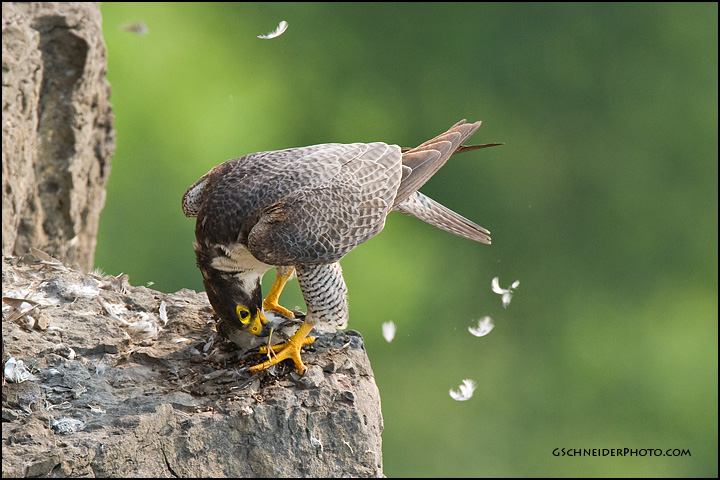
Adult peregrine plucking Spotted Sandpiper prey
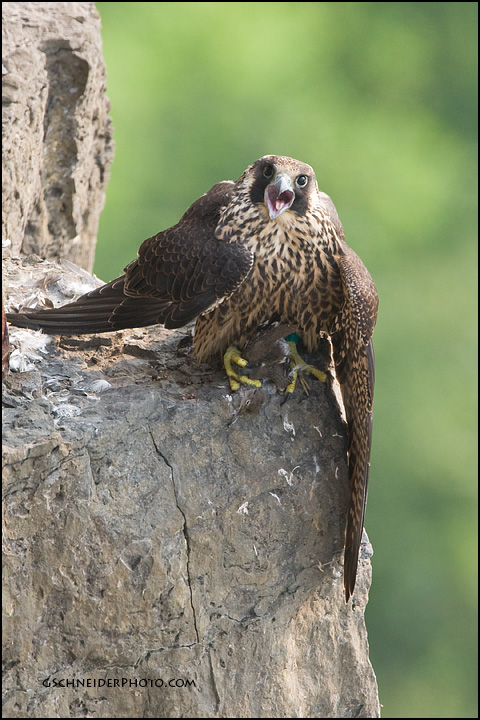
Juvenile peregrine with Spotted Sandpiper
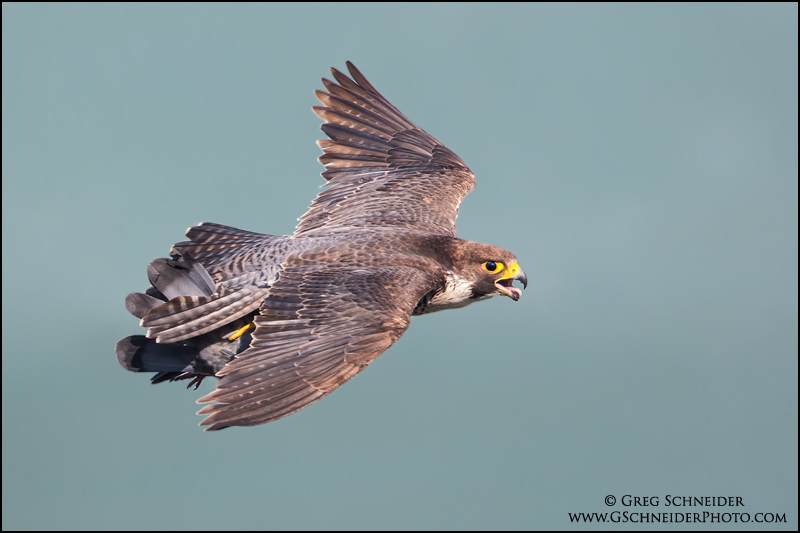
Adult peregrine in flight with pigeon prey
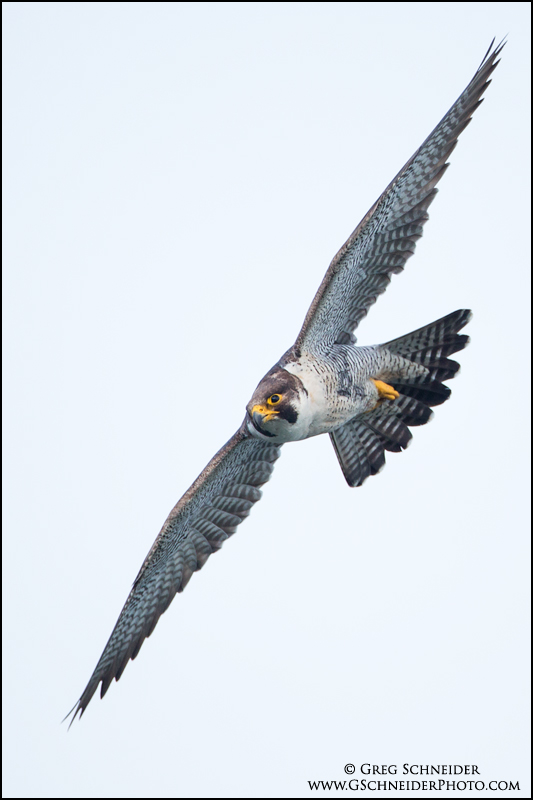
Adult peregrine banking sharply in flight
Wilson’s Plover family
I can’t help but think how appropriate this photo is for today: a female Wilson’s Plover “brooding” her 3 chicks on a Florida beach. This process is used to regulate the chicks’ body temperatures, especially when they are very young. For comparison, the mother is about the size of a robin, and the chicks are literally little fuzz balls.
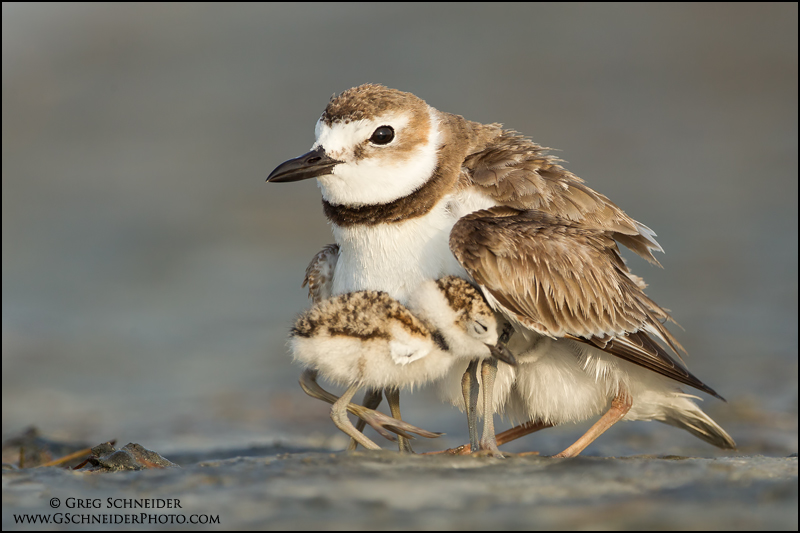
Wilson's Plover female brooding her chicks
One for Valentine’s Day
This is the best photo I could find for today…wish I had some avocet photos in my collection, as they would be even more appropriate!
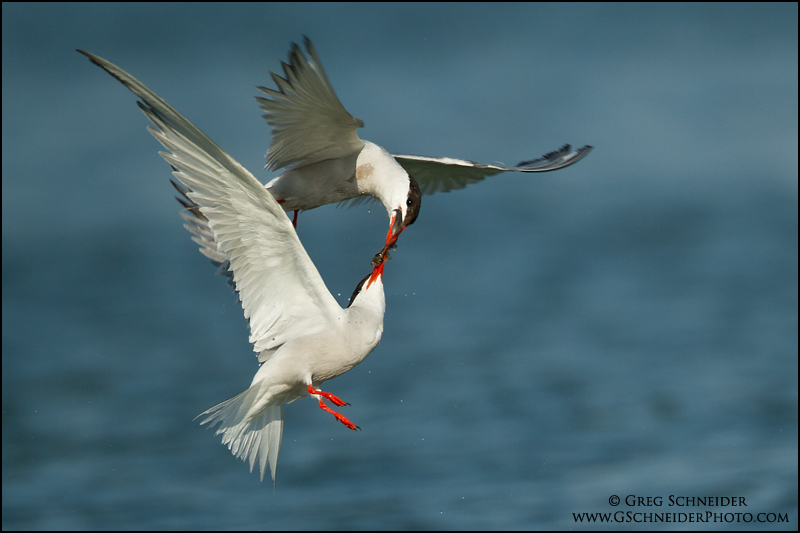
Common Tern courtship flight - Canon 7D - 800/5.6IS
Snowy Owls in sweet light
I’ve added two more images of snowy owls from last winter, photographed here in Ontario, Canada. I have many more photos to go through. I really liked the light on both of these, and it was great to have this co-operative female snowy to photograph as she hunted.
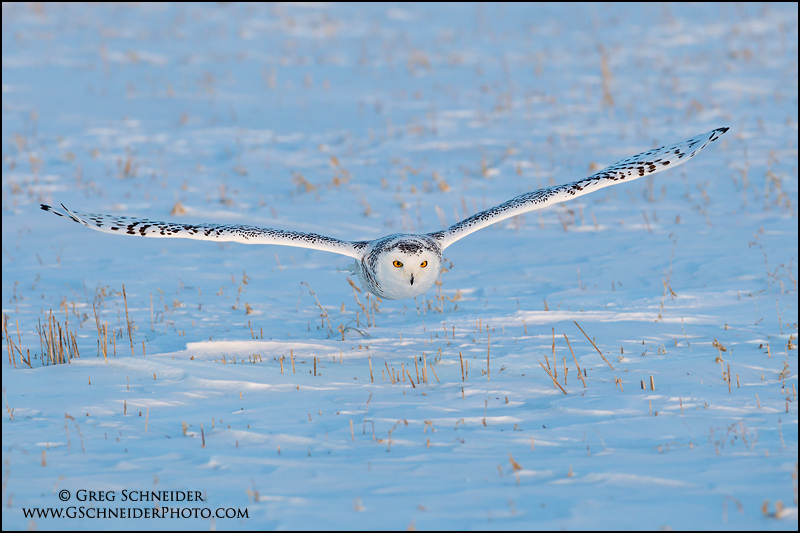
Snowy owl hunting prey (click to enlarge) - Canon 1DIV - 300/2.8IS
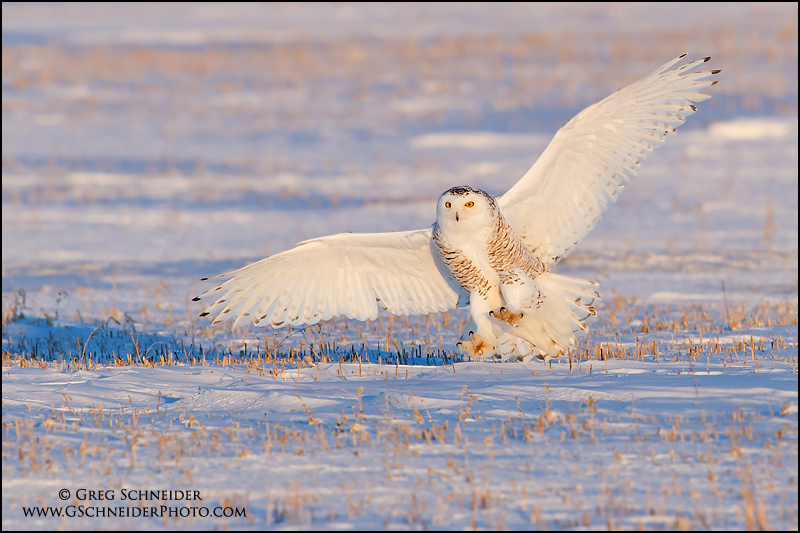
Snowy owl landing in corn field at sunset (click to enlarge) - Canon 1DIV - 300/2.8IS + 1.4x
Yellow-bellied Sapsucker
A very sharp looking woodpecker, the yellow-bellied sapsucker is quite common further north in Ontario, especially in the Algonquin Park area. Their distinctive “wells” that they drill in trees serve as a food source for hummingbirds, who arrive in the northern forests well before plants begin to flower, and are thus very dependent on the sapsuckers for the sap their wells produce. The sap attracts bugs and other prey items for the sapsucker. As a result of the damage to the tree, sapsuckers are important agents of change in the northern forests.
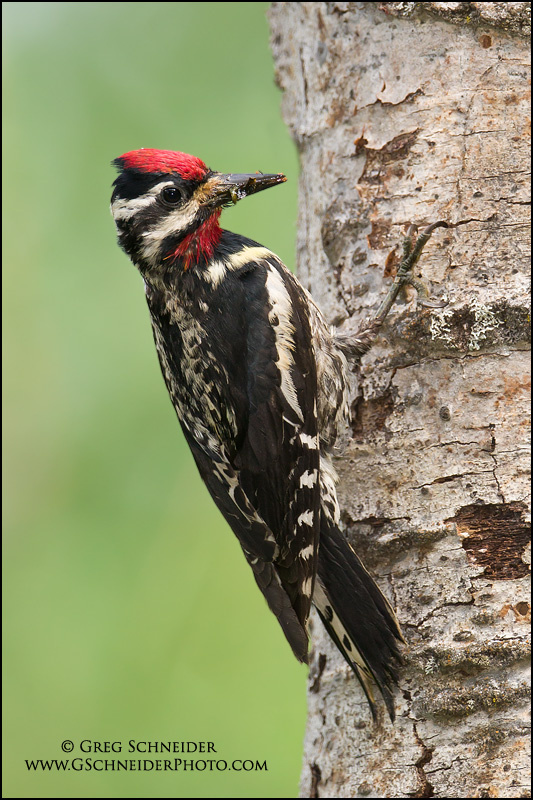
Male Yellow-bellied Sapsucker with food (click to enlarge) - Canon 1DIII - 800/5.6IS
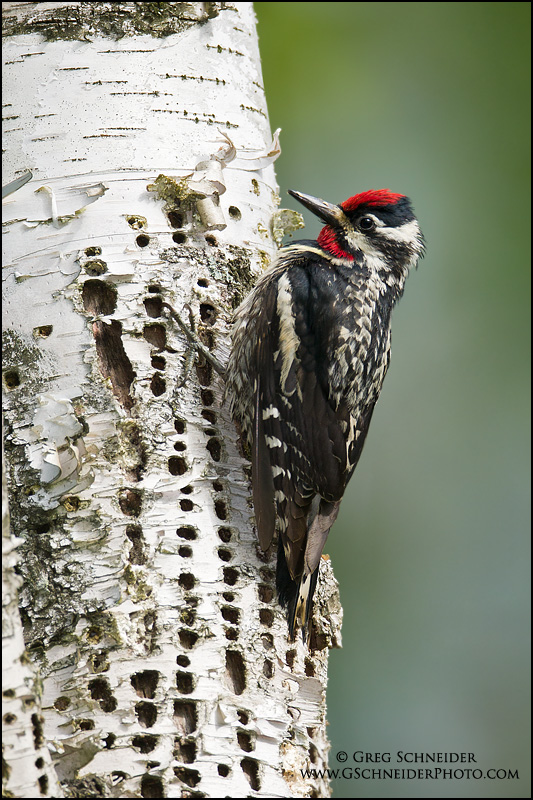
Male Yellow-bellied Sapsucker at wells (click to enlarge) - Canon 1DIII - 800/5.6IS
Blue-Winged Warbler
As mentioned in my previous post, the Blue-Winged warbler is the “cousin” to the Golden-Winged warbler. Its habitat is quite similar, though it’s range is more southerly, yet expanding northwards. The Blue-Winged is exceptionally common in my area, and their buzzing song often emanates from the shrubbery, particularly any raspberry bushes. Despite their commonness, I have not photographed them too extensively, with the exception of one fantastic afternoon in the summer of 2008, in a field just minutes from my house. This particular male was extremely accommodating and allowed for many close views over the course of an hour or two. The species forages nearer to the ground than other tree-top dwelling warblers, making photography much easier, and affording closer views and better angles.
The Brewster’s warbler hybrid sometimes occurs in my area as well, and my one chance at photographing one was ruined by my inexperienced self having written it off as a first year Blue-winged in poor plumage. At least I’ll know for next time!
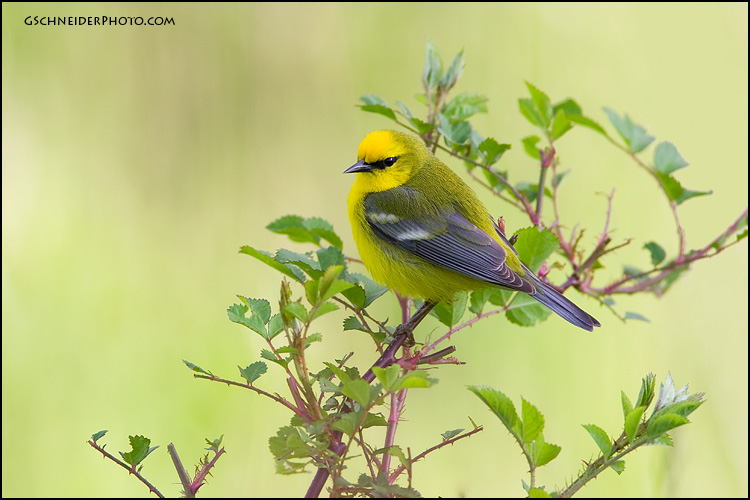
Blue-Winged Warbler in habitat (click to enlarge)
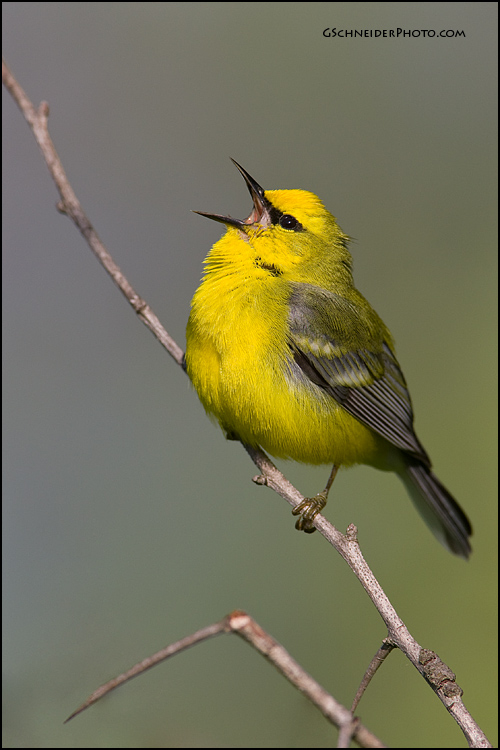
Blue-Winged Warbler singing (click to enlarge)
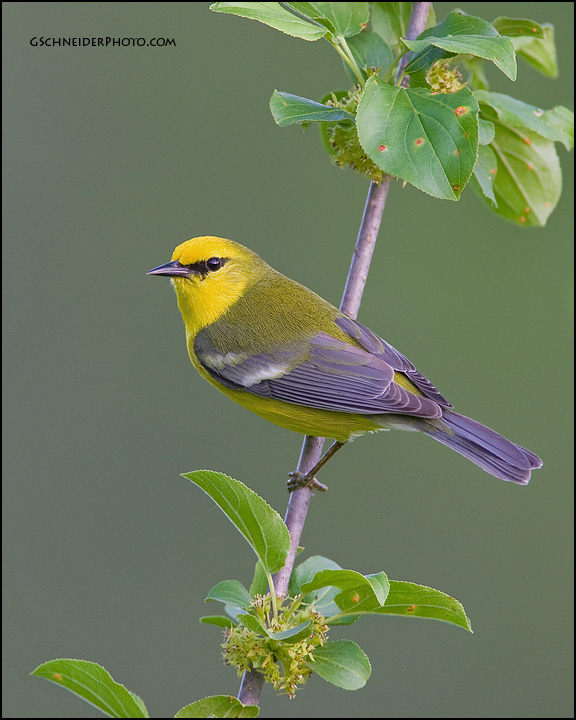
Blue-Winged Warbler profile (click to enlarge)
View more, or order a print at my gallery!
See more warbler images here
Golden-Winged Warbler
This spring I had the pleasure of having several opportunities to photograph one of the most attractive wood warblers, namely the Golden-winged Warbler. This dashing little beauty is sadly declining across its range, and being pushed northwards, due to its southerly cousin, the Blue-winged Warbler, which is moving northward, perhaps due to warming climates. Both are closely related, and where their ranges overlap they often create hybrids (Brewster’s and Lawrence’s warbler). These hybrids are typically less hardy than their pure species, and are not all that common.
Currently, the best place to find the Golden-winged warbler seems to be near the Canadian Shield area, or in northern Michigan. It can also be found south of these areas, but only irregularly. Thankfully, the Golden-wingeds seem to be holding their own in the northern areas, with the Blue-winged being a rare sight in the Shield. The threat is still potent, and there is a possibility that through hybridizing (cross-breeding) with the blue-winged race and reduction of the golden-winged gene pool, the golden-winged race may no longer exist in a decade or so, according to some experts. As it stands now, this species is classified as ‘near threatened’ by the IUCN.

Golden-Winged Warbler on Tamarack (click to enlarge)

Golden-Winged Warbler (click to enlarge)

Golden-Winged Warbler in habitat (click to enlarge)
You must be logged in to post a comment.