Category: Birds
Red-breasted Sapsucker in habitat
I’ve had mixed success shooting red-breasted sapsucker on the west coast. Despite visiting several locations where other photographers have easily obtained great photos, I was always hampered by either not finding them, or having uncooperative birds.
On one occasion did obtain several photos, and although the distance was much farther than I would prefer, I used slight more creative cropping to frame the bird in a pleasing way. Traditionally the general rule of thumb would have been to crop with the bird in the lower left part of the frame, but to my eye that left me with far too much of the tree trunk in the frame. To me this gives a great perspective on the typical rain forest habitat this bird lives in.
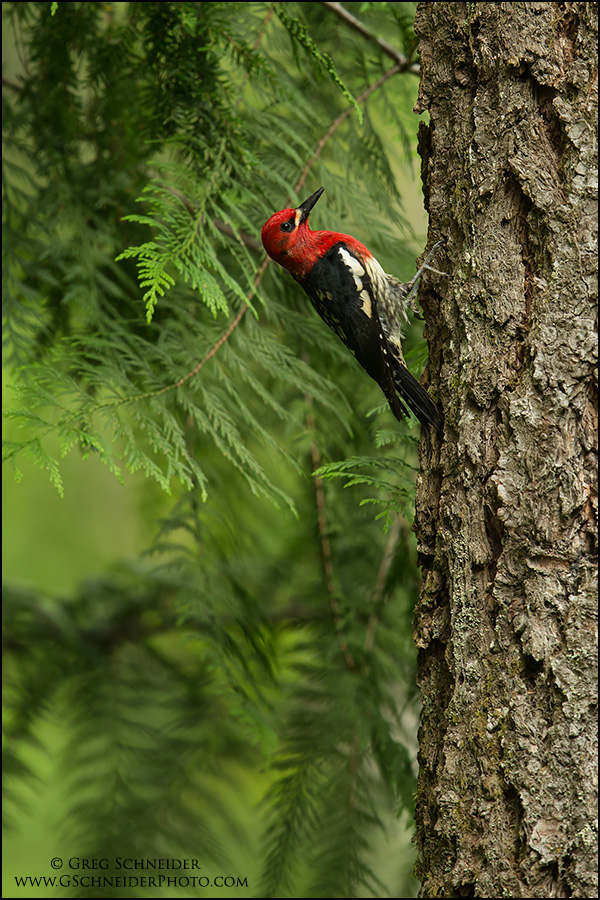
Red-breasted Sapsucker in Habitat (click to enlarge)
Happy New Year
I thought this was a very appropriate photo to start off the year – metaphorically “taking off” into the sunrise of 2014. One photo from my recent trip to NM/AZ.
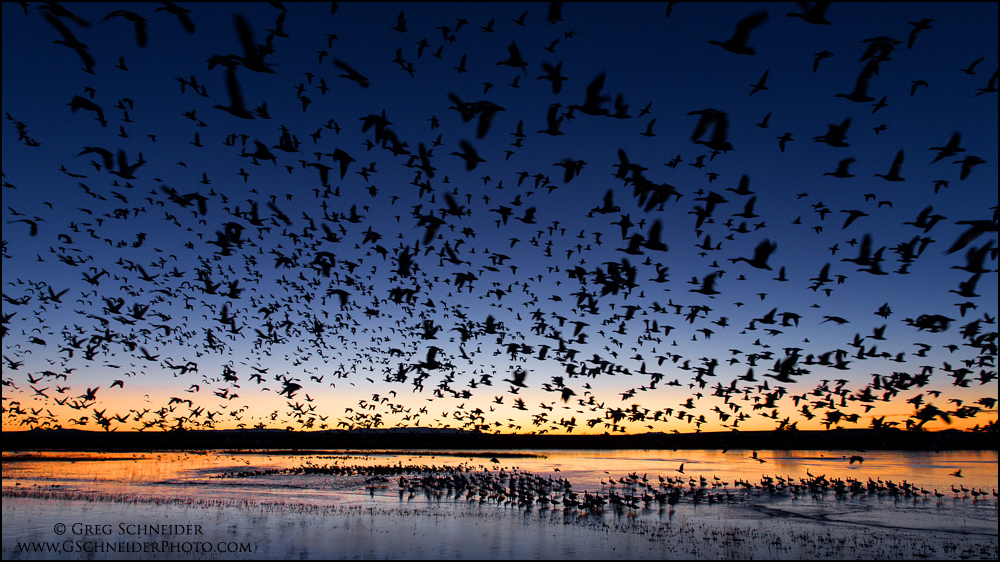
A flock of snow geese takes off at sunrise (click to enlarge)
Bald Eagle preview
Having just returned from a week in Alaska, I thought I would share one image which caught my eye. I’ve never shot so many images and filled so many cards in such little time. Hope to process and post more soon!
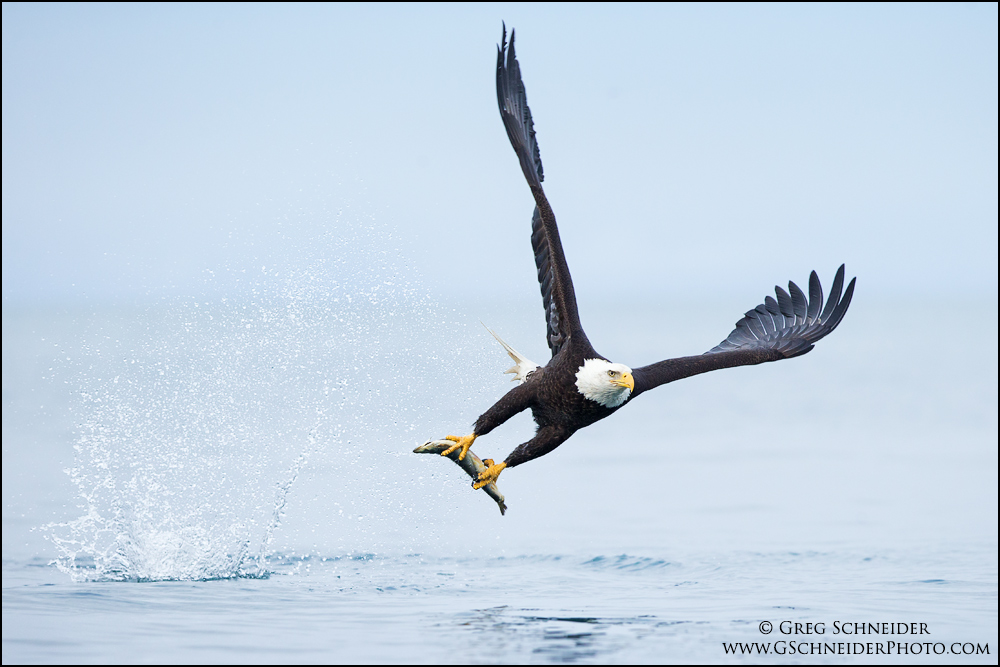
Bald Eagle snatch
Peregrines of Niagara Falls
As residents of cliffs (alternatively, downtown office towers), it should come as no surprise that peregrine falcons breed at Niagara Falls. My first visit was in 2008, when they nested on the Canadian side and entertained photographers and birders at length. From my understanding they then bred on the American side for several years, which is not well-suited for photography. This year (2012) they once again nested on the Canadian side, in the old OPG building. This put them directly below the sidewalk along the edge of the gorge, just hundreds of yards from the falls’ edge.
I visited on several occasions, and while opportunities are never guaranteed, one day in particular was incredible, with the young peregrines testing their wings, chasing each other and learning how to take food from their parents – all in midair. It is one of a kind sight to see a peregrine rapidly coast upwards on thermals, just inches from the gorge’s fall, spiralling hundreds of feet up, only to tuck its wings back in a rapid stoop in pursuit of prey. These spectacular stoops are almost too difficult to photograph at close range, as these have been measured at nearly 200mph! Here’s to hoping they return next year to entertain onlookers. To be honest, I think the birds are almost more curious about us at times than we are of them.
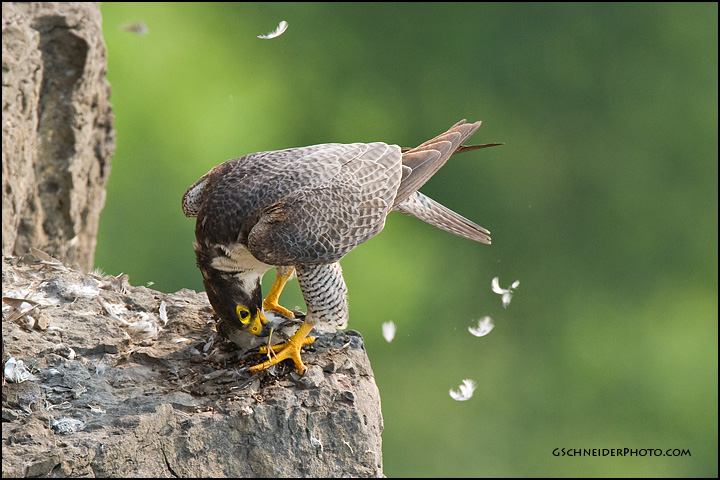
Adult peregrine plucking Spotted Sandpiper prey
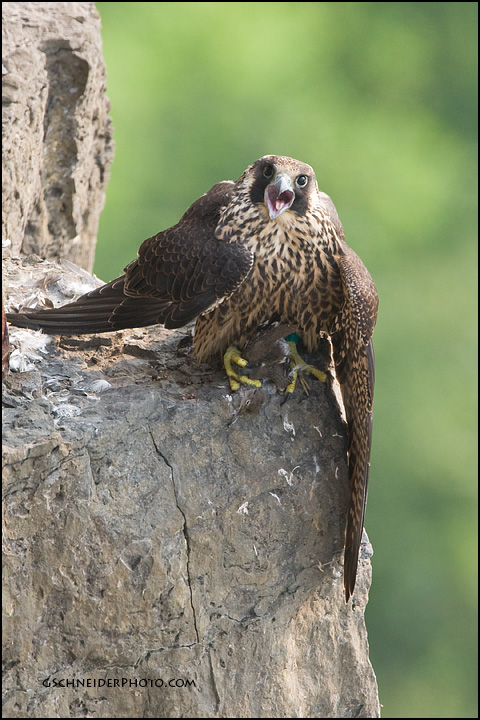
Juvenile peregrine with Spotted Sandpiper
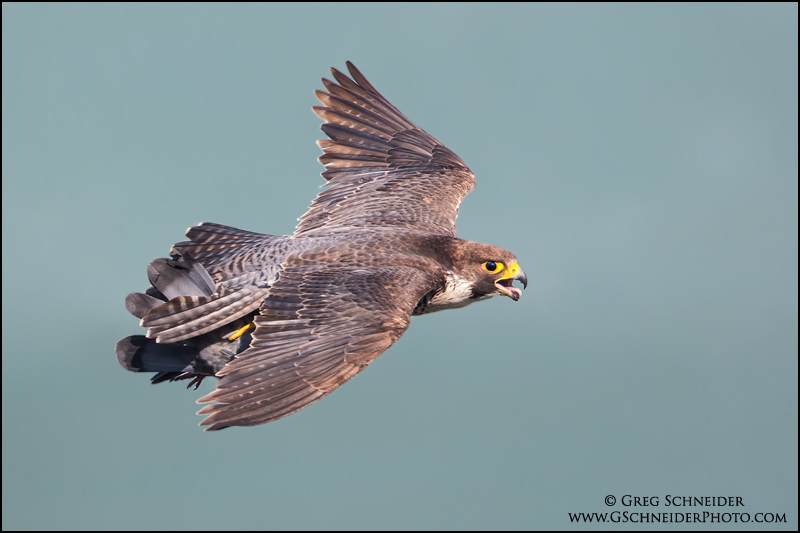
Adult peregrine in flight with pigeon prey
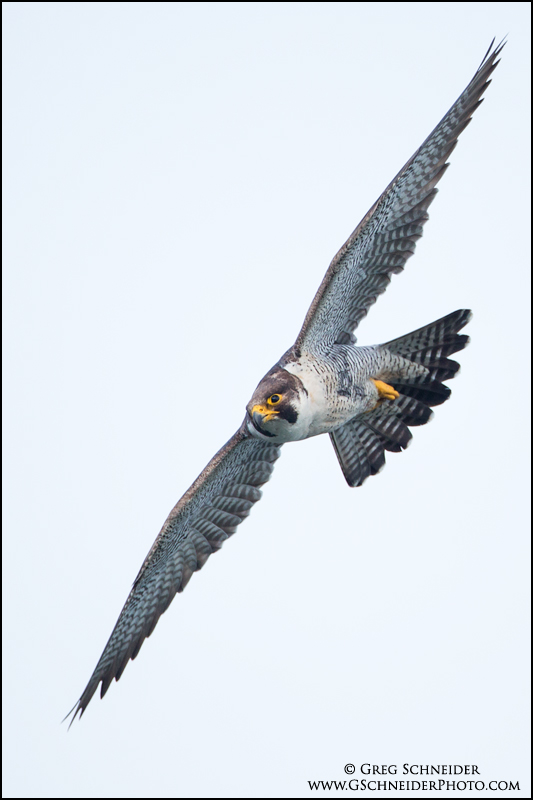
Adult peregrine banking sharply in flight
Wilson’s Plover family
I can’t help but think how appropriate this photo is for today: a female Wilson’s Plover “brooding” her 3 chicks on a Florida beach. This process is used to regulate the chicks’ body temperatures, especially when they are very young. For comparison, the mother is about the size of a robin, and the chicks are literally little fuzz balls.
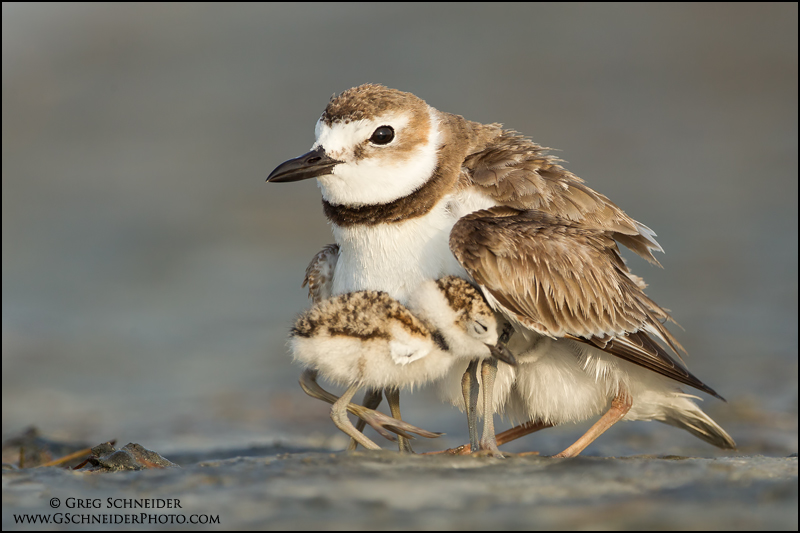
Wilson's Plover female brooding her chicks
One for Valentine’s Day
This is the best photo I could find for today…wish I had some avocet photos in my collection, as they would be even more appropriate!
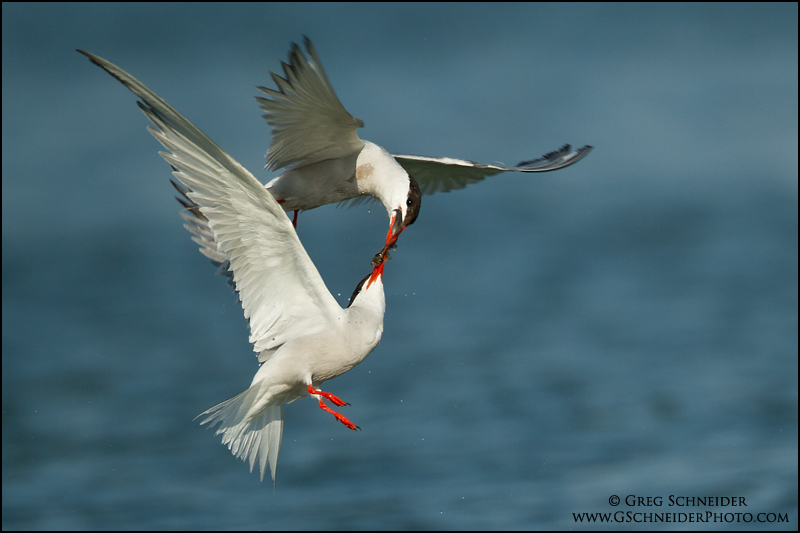
Common Tern courtship flight - Canon 7D - 800/5.6IS
Signs of spring: Tundra Swans
With reports of early migration of tundra swans, I went back to process some of my photos of them. They are a species we typically only see in early spring, as they pass through. Present year round in Southern Ontario are Mute Swans, a non-native bird which is the most common swan. Less common, but still present in large numbers in winter are the trumpeter swans, the largest of the native swans. They can still be found throughout the summer, but mostly in marshes (such as Wye Marsh) in central Ontario where they breed.
I hope to add some more photos this year!
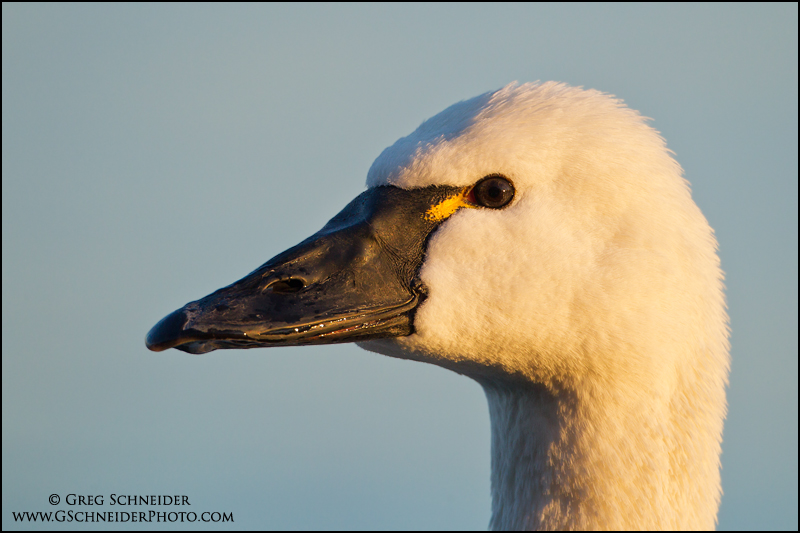
Tundra Swan Portrait - notice the distinctive yellow mark - Canon 1DIV - 800/5.6IS
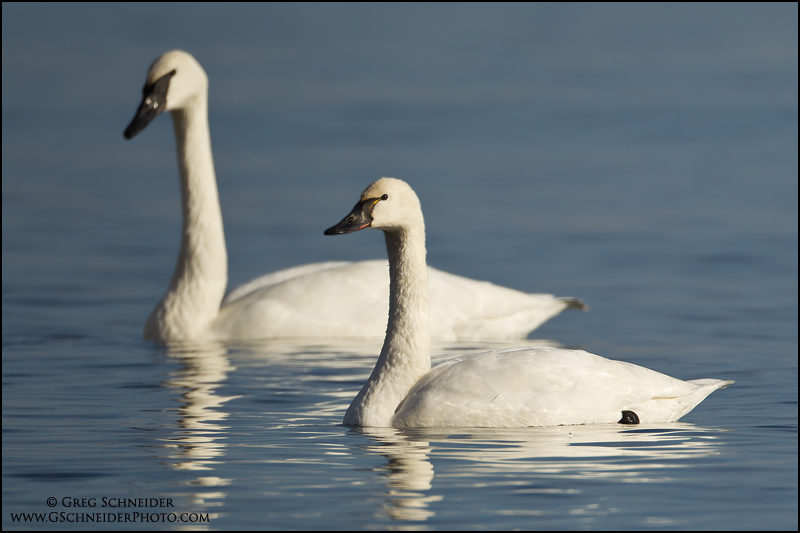
Tundra Swan (foreground) and Trumpeter Swan (click to enlarge) - Canon 1DIV - 800/5.6IS
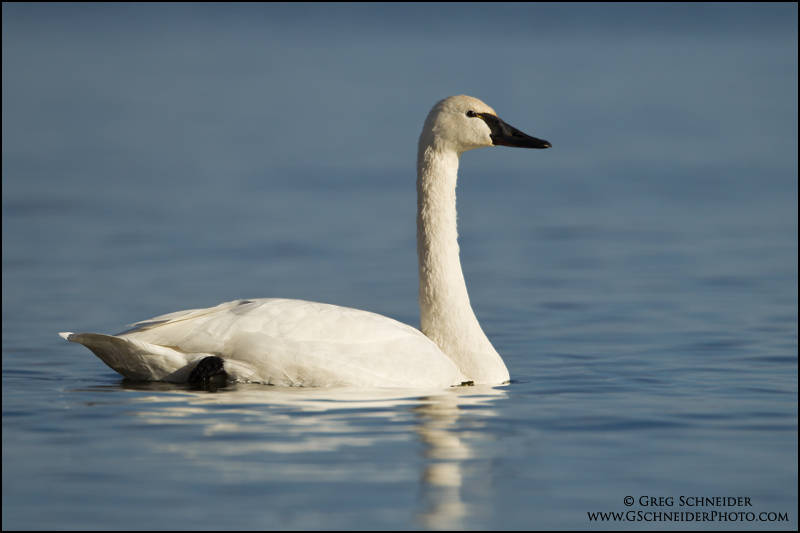
Tundra Swan on calm water (click to enlarge) - Canon 1DIV - 800/5.6IS
Snowy Owls in sweet light
I’ve added two more images of snowy owls from last winter, photographed here in Ontario, Canada. I have many more photos to go through. I really liked the light on both of these, and it was great to have this co-operative female snowy to photograph as she hunted.
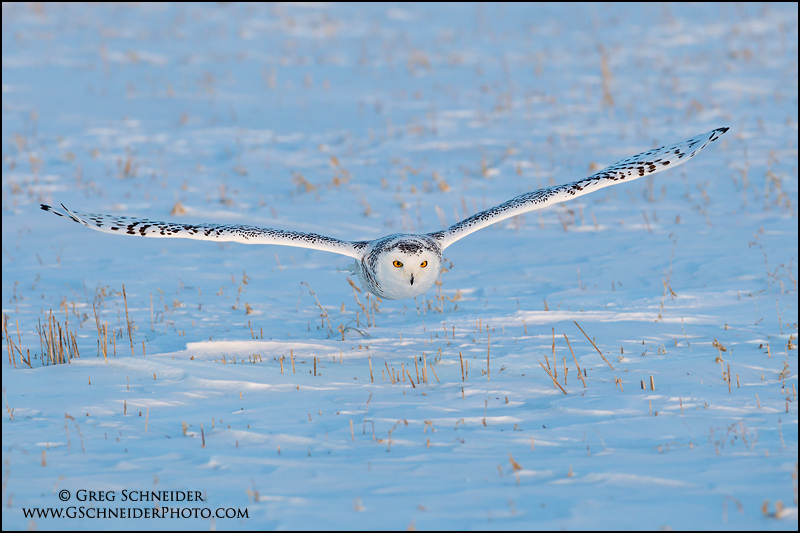
Snowy owl hunting prey (click to enlarge) - Canon 1DIV - 300/2.8IS
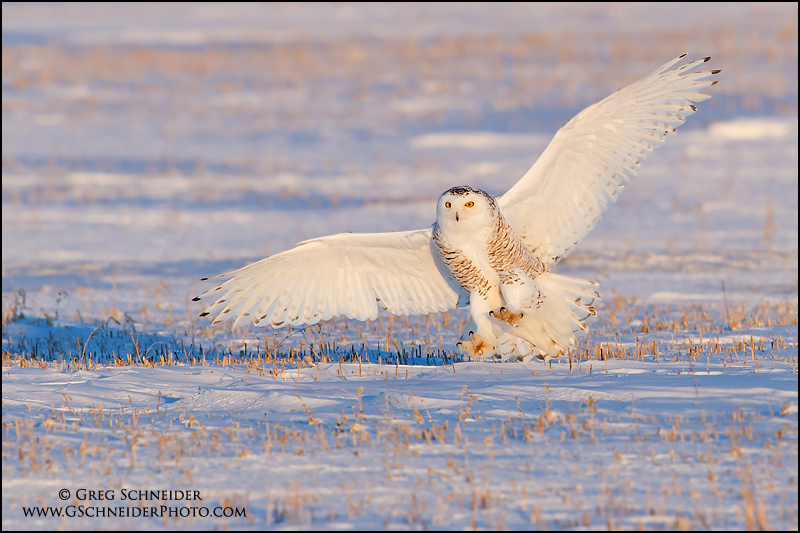
Snowy owl landing in corn field at sunset (click to enlarge) - Canon 1DIV - 300/2.8IS + 1.4x
Yellow-bellied Sapsucker
A very sharp looking woodpecker, the yellow-bellied sapsucker is quite common further north in Ontario, especially in the Algonquin Park area. Their distinctive “wells” that they drill in trees serve as a food source for hummingbirds, who arrive in the northern forests well before plants begin to flower, and are thus very dependent on the sapsuckers for the sap their wells produce. The sap attracts bugs and other prey items for the sapsucker. As a result of the damage to the tree, sapsuckers are important agents of change in the northern forests.
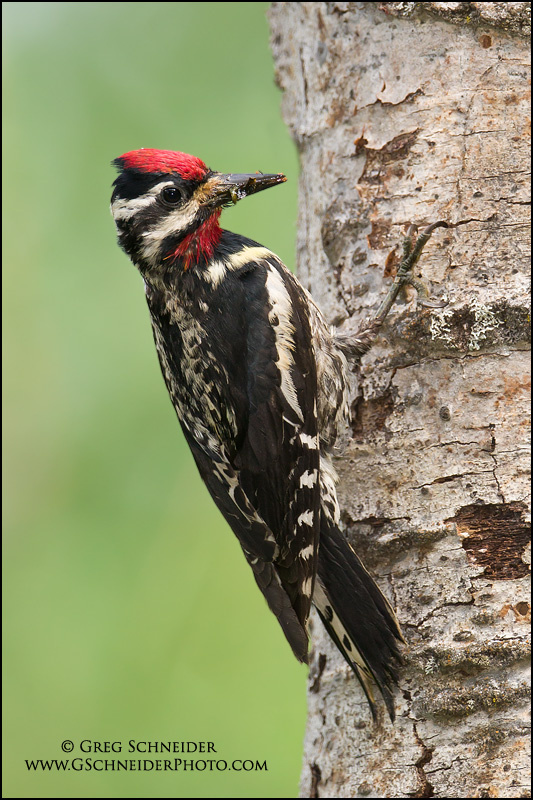
Male Yellow-bellied Sapsucker with food (click to enlarge) - Canon 1DIII - 800/5.6IS
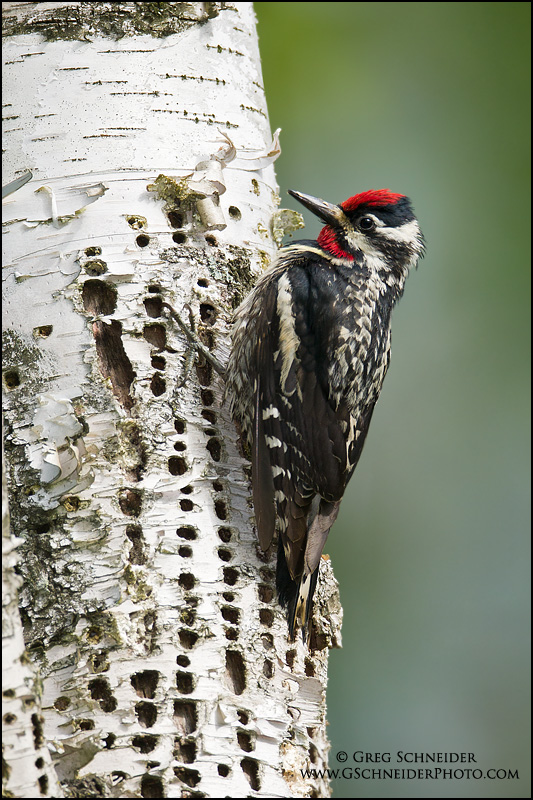
Male Yellow-bellied Sapsucker at wells (click to enlarge) - Canon 1DIII - 800/5.6IS
Greater Scaup
Greater Scaup is a duck species in decline in North America. They winter in significant numbers locally, and are seemingly more common then their Lesser Scaup cousins. Here are a few photos taken from a dock in Hamilton as they mingled with the other ducks.

Greater Scaup (drake) (click to enlarge) - Canon 50D 600 f4 IS

Greater Scaup hen (click to enlarge) - Canon 50D 600 f4 IS

Greater Scaup preening (click to enlarge) - Canon 50D 600 f4 IS
You must be logged in to post a comment.